
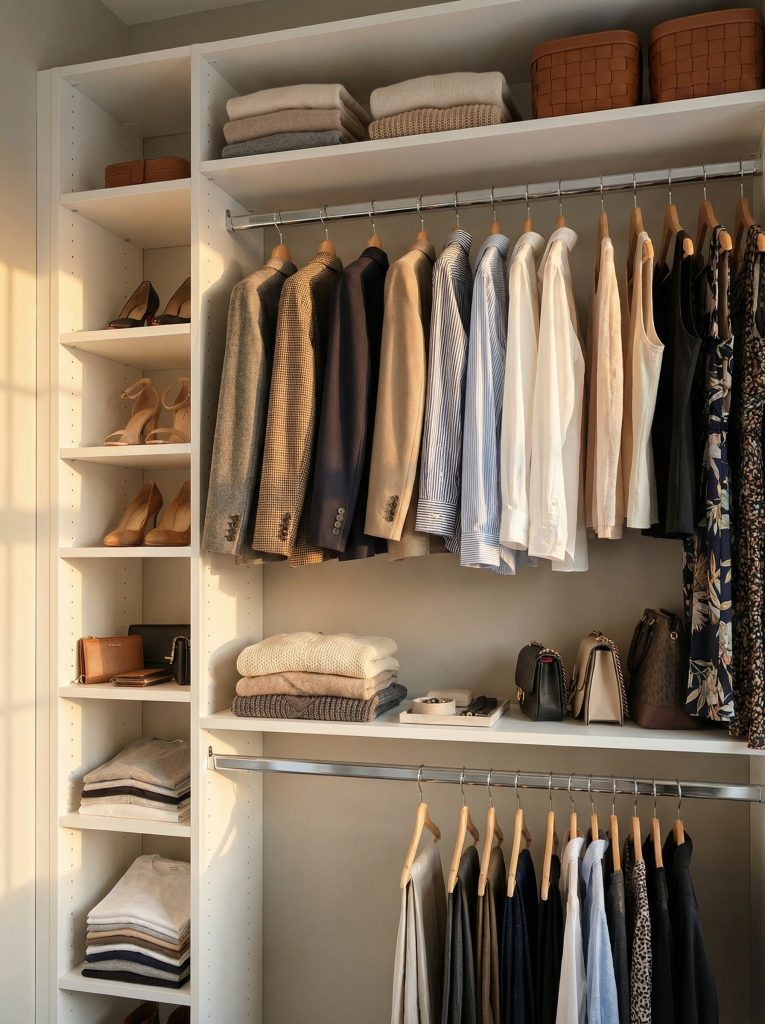
Living in Minnesota means dealing with dramatic seasonal wardrobe changes. From heavy winter parkas and boots to light summer dresses and sandals, Twin Cities homeowners need closets that can handle it all. Here is how to organize your closet to work with our four distinct seasons instead of against them.
The Minnesota Closet Challenge
Most closet systems are designed for climates where the temperature stays fairly consistent. But in Minneapolis and St. Paul, we swing from -20 degrees in January to 95 degrees in July. That means you need storage for bulky winter coats, multiple layers of transitional clothing, and lightweight summer wear, often all at the same time during spring and fall.
A Season-by-Season Closet Strategy
#### Spring (March – May): The Transition
Spring in Minnesota is unpredictable. You might need a winter coat on Monday and a light jacket by Friday. Keep these tips in mind:
- Keep winter coats accessible through April. Do not pack them away too early. We all remember that late April snowstorm.
- Move heavy sweaters to upper shelves. You will still need them occasionally, but they should not take prime real estate.
- Bring rain gear forward. Spring showers are constant. Keep rain jackets and waterproof boots within easy reach.
- Start a donation pile. As you pull out spring clothes, set aside anything you did not wear last year.
#### Summer (June – August): Light and Accessible
- Store heavy winter items. Vacuum-seal bags work great for bulky items. Place them on high shelves or in under-bed storage.
- Maximize hanging space for dresses and light fabrics. These wrinkle easily in drawers.
- Dedicate a spot for lake and cabin gear. Swimsuits, cover-ups, and outdoor clothing need their own zone.
- Keep a light layer handy. Minnesota evenings can cool down, even in July.
#### Fall (September – November): Layering Season
- Organize by layers. Group base layers, mid layers, and outer layers so you can grab-and-go on chilly mornings.
- Pull out boots and scarves. Give them prime lower-shelf and hook space.
- Rotate summer items to storage. By October, shorts and tank tops can move to upper shelves.
- Prep your coat section. Make room for the heavy coats that will dominate your closet for the next five months.
#### Winter (December – February): Maximum Storage Mode
- Heavy coats need space. They are bulky and take up more rod space than any other garment. Plan accordingly.
- Boot storage is critical. Wet, slushy boots need a drying area near the entry, not dripping on your closet floor.
- Accessory organization matters most now. Hats, gloves, scarves, and neck warmers multiply fast. Use drawer dividers or hooks.
- Keep workout and base layers accessible. Cold-weather exercise gear should not be buried.
Custom Closet Features That Handle Minnesota Seasons
If you are designing a new closet (or redesigning an existing one), here are features that make seasonal transitions painless:
- Adjustable shelving: Move shelves up or down as bulky winter items come and go.
- Double hanging rods: Use both levels in summer (lighter clothes), convert to single high rod in winter (heavy coats).
- Pull-out baskets: Perfect for seasonal accessories you swap out quarterly.
- High shelves for off-season storage: Vacuum-sealed bags of off-season clothes stay accessible but out of the way.
- Mudroom integration: A separate entry closet for wet winter gear keeps your main closet clean and dry.
When DIY Is Not Enough
If you find yourself fighting your closet every time the seasons change, it might be time for a custom solution. A closet designed for Minnesota living accounts for all four seasons from the start, so you never run out of room.
At Diseño Closets, we design closets specifically for Twin Cities homeowners. We understand the unique storage challenges our weather creates, and we build solutions that make seasonal transitions effortless.
Ready to stop fighting your closet? Schedule a free consultation or call Delia at 651-646-0319.